


A D-Day Travel Experience


There are 4 must-sees on your D-Day itinerary: the Imperial War Museum, the Cabinet War rooms, the HMS Belfast and Britain at War experience. These are included in the London Pass. If you are staying at the Marriott, it’s a relatively short walk to the Imperial War Museum. This is the most comprehensive war museum including artillery, tanks, and a multitude of exhibits highlighting the different war arenas and types of battles, air, sea and land. During 2004 they have a special D-Day highlighted exhibit. The museum is free but spring for the audio headsets to get the most out of all the exhibits. Plan at least 2 hours or more for this museum.
The next place to visit would be the Cabinet War Rooms. This is Winston Churchill’s World War II headquarters. You will enjoy seeing it as it was then, with audio of the great man himself as you walk through strategic parts of the museum. This museum is in the Whitehall complex where much of the government buildings are today. It is across the bridge from the Marriott and a short walk from there. As you head up Parliament Street toward Whitehall your will see the Cenotaph–which is the war memorial by Sir Edwin Lutyens. It is here that the Queen places the wreath for the war dead each year on Veterans Day. Then go back a half block to King Charles Street to proceed to the Cabinet War Rooms. Plan at least an hour for this experience.
If you can see those two museums on one day, it will leave you the Belfast and the Britain at War experience for the next day. The HMS Belfast is by the famous London landmark Tower Bridge. It is also on the South bank for entry to this historic ship. The Belfast participated in D-Day, built in 1939 it was a World War II Cruiser and opened as a naval museum in 1971. From here it is a short walk to the Britain at War Experience which recreates the London Blitz and renders a deep insight into the times that led up to D-Day.

While you are in London you may want to see a play, an opera or a concert or some of the other non-military museums, like the British Museum, all of which are in easy reach of a centrally located hotel like the Marriott. This should be day 3 (or 4 with Duxford) of your trip. Now that you’ve gotten the background covered, time to head down to Portsmouth on the English coast to see the beginning of the invasion. This journey will begin at Waterloo station where you will catch the train to Portsmouth. This trip is about an hour and a half, a good chance to view the English countryside.
If you have a general interest in ships and naval history, you will enjoy the Portsmouth Royal Navy Museum. Here you can become immersed in the rich history of the Royal Navy and view historic ships, including the Mary Rose and Nelson’s HMS Victory. But if time is of the essence head for the D-Day Museum. The centerpiece of the museum is a 272 ft. tapestry depicting stirring scenes of Operation Overlord as the D-Day endeavor was called. As you look at this masterpiece there is a “SoundAlive” commentary to take you back to that day. The museum also has a unique and dramatic film show that includes original, historic footage and archive film to round out your experience. I would recommend staying the night in Portsmouth, as you can leave your luggage at the hotel while you visit the city. You can then head to Normandy the next morning. However, this is decision time.
Your next decision is whether you want a day or night crossing of the channel. This is not the shortest distance between the UK and France which is why the Allies chose to land on the Normandy coast rather than Dunkirk, the most likely spot. They believed that this provided the best element of surprise. That said, a channel crossing is between 5 and half and 8 and a half hours. The longer being overnight. You can use it as your floating hotel, book a cabin and when you get up in the morning you will be in Le Harve or Caen. If you are not a seaworthy person, may I suggest you do a day trip to Portsmouth, keep your London hotel, go back there for the night and take the Eurostar to Calais from Waterloo Station the next day and rent a car from here to get you to the Normandy area. You can also opt to go on to Paris and do day trips from Paris to Normandy but it will severely limit your time as it requires much daily travel time.
So, whichever route you take, getting to Normandy will take a day, just like it took the Allies! A car is essential for this journey as the places are a bit spread out. It will also give you the most flexibility to spend the amount of time you want to spend. There are 3 major museums, the beaches and the cemetery which you will all want to see. Depending on your depth of experience this can take 2 or 3 days.
There are over 20 museums on the Normandy Battlefield, the primary museums are at St-Mere-Eglise, Caen and Bayeux with the additional, Musee de la Liberation in Cherbourg. I would start at St-Mere-Eglise, because this is how D-Day began, with the paratroopers. When you purchase your ticket here ask for the flyer which gives you a reduced price entry to the other Normandy battlefield museums. In St-Mere-Eglise there is still a model of the paratrooper, John Steele, hanging from the church tower just as he did on D-Day. The Musee Airborne is housed here. It is made up of personal objects and touching testimonies of the American liberators of the 82nd and 101st Airborne Paratrooper Divisions,and there are examples of a WACO Glider and the C47 Transport. There is film footage of that day as well. It will help you get a sense of the people involved in this endeavor from the American paratroopers to the French citizens of St-Mere-Eglise.
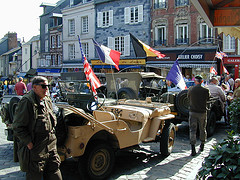
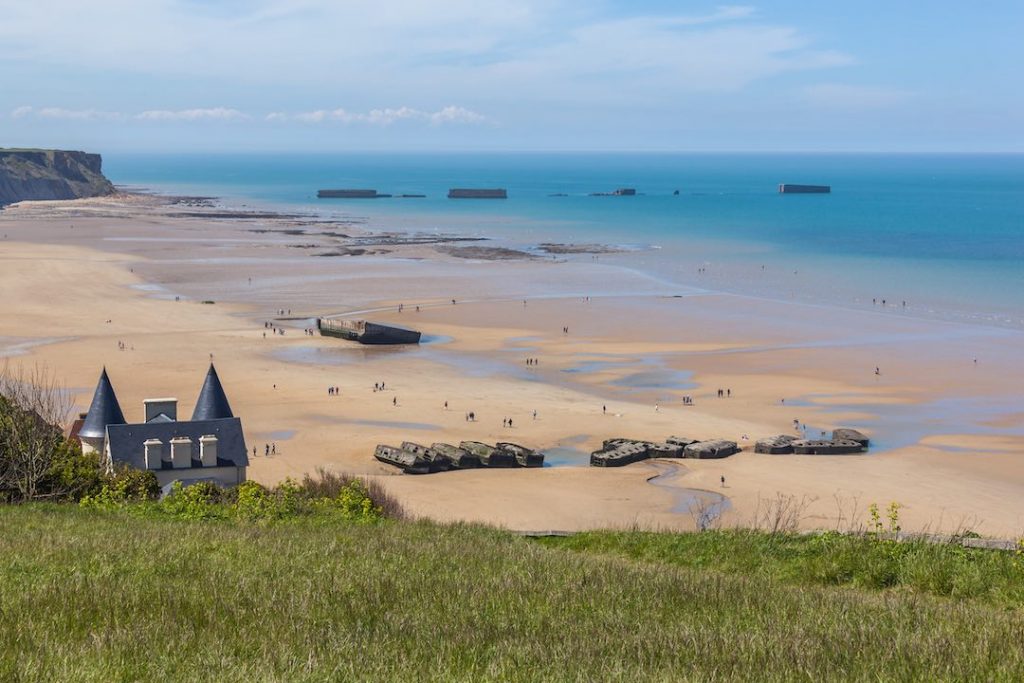
The next day head to Bayeux and the Museum of the Battle of Normandy. This museum tells the story of the Battle of Normandy – what fighting took place beyond the well known events of D Day. Gathering together an unprecedented collection of uniforms and equipment, the museum is arguably the best in Normandy. Aside from the militaria, weapons and vehicles, there are hundreds of photographs, maps and illustrations helping to explain the events that took place in the summer of 1944. In addition there is a film show, a good shop and a permanent exhibition about the air war in Normandy. From Bayeux you can proceed to the beaches of Juno, Gold and Sword. Your will see Pegasus Bridge, where the first French house was liberated and pass the evocative ruins of the artificial harbor towed across from England at Arromanche-les-Bains. Continuing to Caen visit the Memorial of Caen. It is a museum dedicated to Peace. It will take you through the events leading up to WW II and D-Day itself. A fitting end to your D-Day experience.
Depending on your time and level of interest, you can spend many days in the various museums and sites in Normandy. But 2 or 3 days should enable you to see the highlights in good depth. From here I would suggest you turn in your car and train it to Paris to end your trip in the uplifting City of Lights. A fitting end to your D-Day experience, for it was when Paris was liberated that everyone saw the end of the war in sight. Trains leave from Caen and Le Harve to Paris, it is about an hour and a half to 2-hour trip. After a few days in Paris, you can then return to the USA from Paris or catch the Eurostar or a plane back to London. (Driving in Paris can be a harrowing experience even for the adventurous, I would not recommend it. Parking is also difficult to find)